Showing posts with label Growth. Show all posts

Saturday, 25 January 2014

Weekly Poll Lowdown

In this weekly poll I asked you to become YouGov (or more realistically Betfred or Ladbrokes). You seem to think that by the end of this year the Conservatives will be ahead in the polls. A fair proportion also believe that things will stay as they are with Labour being in the lead. Some mad people think the UKIP will take the lead in the polls and the most insane of you believe the Lib Dems will have the highest proportion of votes. I think 4% of you need to see some sort of therapist.


Which Party will have the largest percentage of the votes by the end of this year?

Conservative
43%
Labour
34%
Lib Dem 
4%
UKIP
20%
No Idea 
0%

Total votes: 56

Before I essentially start stabbing into the dark to try and predict what is going on I must say that any predictions are based on current trends. Trends can change, events can happen. This is why interpreting the results of a poll are so hard, a poll is almost out of date the moment it is published in this weird political whirlpool that exists in Westminster.


Personally though I could see the Conservatives having some sort of lead in polling by December 2014. Since the Autumn Statement, which was in December or winter for some reason, there has been a growing belief that the Conservatives have got it right on the economy and that the United Kingdom is surging upwards at a decent pace. It's pretty hard to argue with 1% growth figures and ones which are predicted to be over 2% this year.
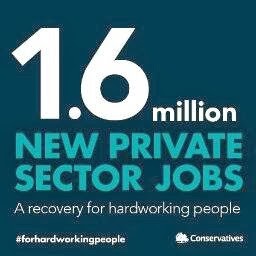

Coupled with this is employment is up by 1.6 million since 2010 and is likely to further increase. Unemployment is also tumbling. Last month saw the second biggest fall on record so that now 7.1% of the workforce are unemployed (closing in on the Bank of England 7% unemployment level for considering raising interest rates). In fact in the last few months the decline in unemployment has been great enough for it to be likely to reach just above or at the pre-recession level by the General Election.


Labour is also all over the place like a very confused octopus. Labour have picked too many and terrible choices of things to talk about over the last few months. For example no one trusts Labour on welfare and yet for half of January they have chosen to lecture the British people about how to reform the failed system they created. It's no wonder the public see the Conservatives as best to deal with welfare. For the last month as well they have been talking about immigration, an issue with very strong opinions. Yet Labour did the most damage by applying no restrictions on immigration and not implementing migration controls with the rest of Europe. Their choices have been poor but selecting two major issues in one month is almost as bad, if I were the average voter I'd be perplexed by what is going on.


The one area where Labour has been concentrating on, and will continue to do so because they has positioned themselves to the point where they can no longer stop, is the cost of living.  There are many problems with putting all your eggs in this basket. Firstly it is marketed as a cost of living crisis. As was pointed out by Andrew Neil, the idea this is a crisis is completely hyperbolic as retail sales are going up caused by middle and low earners spending more. Secondly everyone always complains about the cost of living even in the best economic climates. This is rightly so as people want to keep as much of their own money but this means it has never been a deciding factor in a General Election. The best way to talk about the cost of living is to target a few substantial issues and then talk about them lots, like the Conservatives have done with fuel duty. You don't get anywhere by complaining about everything and therefore nothing. Lastly, although I would not be as brave as the Government or Gudio Fawkes to proclaim the cost of living problem is over, things can only get better from here on in as we have seen with high predicted growth rates and pretty low inflation. There is clearly a shift in opinions on the squeeze.


With these general trends considered I could imagine a 2 or 3 % lead in the polls for the Conservatives  by December 2014. I believe the tide of Labour leading in the polls will turn sometime over the summer. It's not going to get any better for Labour considering the economics and their past record of picking poor places to make a political stand.


Vote in the new poll. 

Friday, 6 September 2013

Economic Resurgence and Roadblocks


I don't think anyone in the Conservative Party is in any doubt that if we're going to win in 2015 the main reason for this will be the economy. We've got to make sure the economy is healthy or well on the way to being so by 2015 or we have no chance of victory. Since my last economic post the picture has got a lot rosier but what are the big roadblocks to a stronger economy.

UK economic pigs on the increase.

The good news is that we are predicted to grow more than anyone thought this year. The OCED, who said that we would grow at most by 0.8% this year, has massively increased their prediction to the UK growing by 1.5%. Indeed it gets better when you look at the annualised rate of growth which is 6% meaning we're growing faster than France, Germany and America (pretty good going). Of course we shouldn't be too optimistic because these are predictions we must wait for the results until we starting patting each other on the back and celebrating an end to a depression. 

The UK in real terms is out preforming Germany and probably will continue to in the future.

This growth is also pretty sustainable, built on the increases from all sectors of the economy. Factory production is seeing a boom that could only be compared to one that took place 20 years ago. Car production is soaring as well (which Top Gear has tooted a lot). The Service Sector is really getting some pace now on the back of increased high street sales (despite threats from the interweb and out of town shopping). Construction figures are the best they have ever been for 6 years. And most importantly Lego has seen a 17% rise in sales. All sectors of the economy are growing, which, apart from last month, has only happened in 1991.

Lego is on the increase.

The best news however is twofold. Unemployment is down and will continue to fall. Expect an increase in the 1.3 million jobs that that have been created in this country since 2010, a good record for the Conservatives in government. The growth in the economy also means tax revenues are up for the government which is good for deficit reduction because the shortfall of tax has led to the deficit falling less than expected by the Chancellor in 2010. Perhaps we will pay off more of the deficit than expected?

All areas of the economy are growing creating more jobs in ares like the car industry.

But this actually leads onto the start of the bad news because the days when cheap government lending is over. The small window we had to pay back or debt with the least cost has virtually closed because yesterday the cost for the UK government to borrow reached over 3%. This is an international rather than a purely UK problem and is an inevitable shift where bankers and other countries realise that governments are not very good at paying back loans. So now each Pound in debt is a bigger weight on the future of the UK. 

Interest Rates are likely to be at an all time low for a very long time.

Also we may see a problem caused by the Bank of England keeping the rates of interest at 0.5% for 3 years (despite some caveats). This move is good for stability as businesses have a pretty clear picture of what to expect of the future, but it's not as brilliant a move for lending as people may think. Although we have started to create more wealth with economic growth, we have a capital problem still in the UK. Cutting taxes would aid this partially but we really need to be encouraging people to save so their money can be leant out, this can be done by raising interest rates. Although a low interest rate will make people want to borrow more it is impossible to do so when there is very little money. If I was Governor I'd start thinking about raising interest rates sometime in mid to late 2014. 

Inflation is something to watch out in case there is a big increase.

Inflation may become a big problem too because the government is going to start trying to get rid of as much as this debt as possible by decreasing the value of money. It has already done this quite a lot with almost 25% of the deficit that paid off by printing more money. With more quantitative easing possibly on the way, the government increasing energy bills and interest rates remaining at a standstill inflation is likely to increase. Bad for business and for people's buying power. Inflation is not something that any government wants to increase and especially before an election which Labour will fight on the cost of living.

Cue Union Flag piggy bank surrounded by money.

So there we are, lots of good news about growth, profit, jobs and deficit reduction but things to watch out for in the next coming years and possibly some mistakes made by the Bank of England and the Government.

Also, what do you think to the new look of the Blog? If you like it then good, if you don't well you'll just have to put up with the blue, red and white combined with a new logo.

Tuesday, 6 August 2013

Top Manufacturing

The BBC is biased against the Right. Time after time it reviews itself and surprise, surprise finds bias on the issues of immigration, Europe, economic news and much more. But there is one programme that seems to be bucking the trend. Top Gear as about the only programme that doesn't have this bias with its news section promoting freedom on the roads, visits Spain to show what happens when you mess up the economy and now shows something a 'little bit special'.


UK manufacturing has been on the rise since the Coalition took power and the fastest growing area in British industry is with cars. Today it was announced that every single area of industry in the UK is growing, the first time this has happened since 1992. Top Gear shows quite well what is going on with the car industry since 2010.

Monday, 5 August 2013

Weekly Poll Lowdown

Here are the results of the first weekly poll of the month on the health of the UK economy. Well it's clear that with over 50% of the vote most people things are going to get worse in the next months. It seems that half of you have either taken to pessimism or left wing negative politics where they try and make out that things have gotten worse under the government.

How do you think the UK economy is going?

Things are on the up.
21%
We are slowly but steadily getting to growth.
13%
No change for a while, yet.
16%
It is very bad and getting worse.
50%
Unsure.
0%

Total votes: 38

For all my lambasting of certain economic government policy for not doing enough they have done some key things to make the UK economy better. All we seem to be getting at the moment is news about how we are starting to get some acceleration in growth. Only today PMI (Services Purchasing Managers Index) for the service sector is the highest it has been since 2006; with July, June and May's PMI combined for all sectors there has not been better economic growth results since the 1998 boom. 


The effects of cuts in corporation tax and to the 50p tax rate has led to higher investor capital which is creating jobs in manufacturing for people. But more importantly for people there has been a positive feeling in consumers from a post Olympic feeling and targeted tax cuts in the budget. Aspiration Nation is the phrase of the moment. Also I think there is a real point of people are tired of going nowhere and so are spending money more often because they just want the doom to be over.

Of course there is much more the government could easily do as I have pointed out many a time to really start having sustainable economic growth, but my ideas haven't yet been taken on by the Prime Minister. My own personal musings is that we are about to see a period of steady economic growth but not a massive spurt. However this is a possibility, many experts are saying that next year we could start seeing 2% of growth. Its only the Left of this country, who know growth means less votes for them who, that paint a picture where things are getting worse. Indeed this government has at worst presided over a stable economy where nothing has changed, there has been no recession since the dark days of Gordon Brown. 

Gordon Brown never managed to control the economy so I've no idea of how badly the rest of the Left would do if left in charge. 

Watch this space to see how far things grow.


 Things are about to get going, but by how much?
  
Vote in the next poll on the sidebar.

Wednesday, 10 July 2013

Privatisation and the Delivery of Success

Today we are about to witness the biggest privatisation in decades. Royal Mail will soon be floated on the stock exchange at the value of billions of pounds. Like the vast majority of privatisations people from the workers to the consumers are left better off than they were when nationalised.

Royal Mail is set to be privatised and be a boon for customers.

Royal Mail at this moment is in a good place for privatisation as it is seen as a safe business prospect. Last year Royal Mail managed to make a profit of £44 million which is good. But this is hardly going to be sustainable for it will need to meet the constant costs of depreciation. Private money can provide for the capital to combat this and innovate to have a better postal service. It is likely that the Royal Mail will see a greater deal of mechanisation and an increase in robots to make for a more efficient, quicker, and much easier service for postmen. And will this lead to job loses? Well if the history of industry is to go on then mechanisation job loses have not been the case as staff are relocated to other jobs that are more technical and thus higher paid with better quality of life following. This coupled with the 10% share deal with workers will lead to a better productivity and a much wealthier workforce.

A more efficient service means one that is better for customers of the Royal Mail.

Shares also bring me onto the second part of why privatisation has been such a success because it has lead to competition to drive down prices and increase quality. 90% of these shares will be floated on the stock market where individuals can buy them. As well as a force to make profit, which is essentially a force to make a better service (see above), there will be a greater deal of competition. This competition will mean a battle on Britain's streets between parcel companies and the revolutionary post companies, such as TNT, for a service that is better or cheaper or both. The mantra of the day will be faster, better and cheaper. Better service for customers is the result of competition in the market place.

TNT and other companies will be seen more on the road delivering us mail with a much better service.

But what of the most major criticism of the reforms which is that it will leave isolated communities, say in the Scottish Highlands, without any mail because they at the moment are not profitable. I would like to highlight the at the moment bit because many areas will be able to be profitable and receive service when Royal Mail and competitors become more efficient.

Isolated communities will still get their post as so long as they are willing to pay, as they do now, someone will do it.

And for those areas that are still not profitable to have a red van visit every door the future still looks bright. It is easy to envisage localised mail companies doing the deliveries who don't need such large costs or big margins. Community mail boxes in easily accessible areas may become a thing and there may be a innovative teenagers, like when doing a paper round, to deliver the mail. I can envisage this because this is exactly what happens in Germany with their privatised postal service where mountain villages are equally cut off. People power will make a better service and solve the problems.

So Privatisation of the Royal Mail is going to lead to very good things so long as Capital, Innovation and Competition are all achieved.

Tuesday, 9 July 2013

Growing Optimism

Optimism in the UK is up whether you're in business or in the Conservative Party. The IMF and recent consumer confidence data is starting to show the start of an economic recovery. Because of this, Labour's woes and the Referendum Bill the Conservatives are also feeling a boost. But should both Tories and the general public feel good about the future?

First to the economy and yes things may be about to start to pick up. Business and Consumer Confidence is at an 8 year high and the IMF has said that 0.9% of growth is coming our way this year which is much better than last year's 0.2%. And this year there has been a bit of help from the government with the 1% decrease in corporation tax and a freeze in capital gains tax. But more importantly in boosting confidence there has been some pretty targeted cuts, where alcohol and petrol is now a lot cheaper than it would have been under Labour.

We are back at pre recession levels with consumer confidence but still a while to go before we reach the point the crash actually happened.

The bad news on the economy front is that the confidence from people isn't based on something totally solid. There hasn't been as many tax cuts by the Government as I have would have liked to see. This isn't the case with the Coalition Government which seem to be relying on positive words and a feel good factor, explaining the for the longevity not of recession of going nowhere and then a sudden pick up. The repetition of 'Aspiration Nation' is not necessarily a bad per se but if things go badly or not as good as the small amount of confidence predicts then the economy will be flat again. But then again most economies have a problem like this.


Overall however the economy has made the Conservatives moderately happy and rightly so because it is because of them putting pressure on George Osborne to add these specific tax cuts that we are seeing some sort of change in the economy. The Conservative Party has been on a roll recently to dictating the amount of spending that will happen in the next parliament to pushing the issue of a referendum on Europe.

What does the opposition think at the moment? Well nothing useful as Labour says it wants to match spend the same but wants to borrow more and will not back the basic principles democracy. What's even worse for Labour is they screwing up massively in Falkirk and day by every single constituency in the UK seems to have Labour candidates selected by Unite in a way that is bordering/maybe illegal. The Conservatives are united and aiding a recovery whilst Labour is anything but. No wonder the poll ratings show a decrease in support for Labour.

The Conservatives are really uniting around the EU Referendum Bill.

So all in all good times. But hold on, the Tories should be weary just like the public. The economy is yet to be confirmed to be definitely on the up, the 1st quarter of this year saw only 0.3% of economic growth. Divisions on Europe are unlikely to come back with the Referendum Bill but if it fails tensions may creep up again. Also what if Ed Miliband suddenly supports it? Falkirk could go two ways now. Ed could look strong and shun the Unions to help Labour or look weak and want their money, although either way it is not good for him really.

Labour is still more popular than its leader will ever be.


In general things are looking better though. Red Ed is too dithering to decide whether he should have jam or butter on his toast and things getting worse for the Government seems a distant prospect now. The only major worry is not to make everyone too over confident. The austerity isn't over yet.

One thing we can rely on is the Red Ed will still be weak.

Wednesday, 26 June 2013

Spend, Spend, Spend

Today was, as you should know, the spending review for 2015/2016. Theoretically this doesn't really need to happen mostly because it is timetabling cuts during the next Parliament, but this is a very politically savy move by the Chancellor to show a plan of action to the Great British public and put Labour on the spot. 59% of the public believe cuts are necessary (up 3 % since the Coalition came to power) but more importantly only 27% of the public think austerity is wrong (down 7% since the Coalition came in). This puts Labour in a tight spot because they can longer credibly say to the public that they will increase spending. The thing the Government is bending the truth a bit on making cuts.

Osborne is being shown up by the Labour Party of the past. I would point out though that the Labour Party at this moment would come no where near to what Healey cut in his time. 

In real terms government expenditure, despite the cuts, is projected to be slightly higher in 2015 than it was in 2011. The broad cut message apart from in 2010 is that in real terms we have stayed very much the same and even went up slightly this year compared to last. But how can this be? It is true that we are cutting lots off government departments, some like Communities and Local Government is going to have over 1/3rd taken off their budget.


We are making real cuts to budgets but overall government spending is going up this year.

So what has gone wrong? Well put simply we haven't seen the growth expected by George Osborne in 2010 and thus tax revenues have been down. Thus to keep our economy going Jeffrey Gideon the Chancellor has decided we need to stimulate the economy to make sure we don't lose the tiny percentage of growth we have at the moment. Because our economy, like somebody dependant on drugs, is so addicted to state spending if we were to start to fix it there would be serious downers experienced, which are politically unpalatable according to the Chancellor.

However the growth problem and lack of revenue can be fixed by lowering tax. At a lower level more people are willing to pay and the economy grows creating even more revenue. In the medium term this will get things going again although we would have to cut a lot more at this moment. Overall however, when comparing it over the 20 or more years it will take if noting changes, we wouldn't have to cut so much because debts and deficits are being paid off more by tax income and less by cuts. Short sharp shock treatment that produces confidence by giving people more money in their pocket.

When we cut the 50p tax rate to 45p the government brought in much more revenue than we did when it was higher. 

The thing is, the public actually think we are cutting way more than is actually going on. 39% of people, a lot higher if we discount the 18% who have no idea about this in the polling data, think we are cutting too far and too fast implying that the Government is cutting spending by several percentage points each year at least. Essentially we are taking a big political hit for no real gain. The debt, which is actually the main issue is increasing too much, there is too little growth and government is still the biggest part of the economy. The deficit is borrowing for borrowings sake an important but nonetheless a side symptom of our problem. What the Government has done so far is good, but it could do better.

There is however one piece of good news. The last budget had some very tactical tax cuts. There is a new feeling of slight optimism. It will not be as great as giving people more money to spend but somehow words such as aspiration and growth mentioned very often have inspired enough confidence to possibly start some sort of private sector led growth in the country. 

The words 'aspiration nation' may just save the UK economy.

Wednesday, 15 May 2013

Over The Pond

Today the growth figures for Europe came out. What a mess, is the best description of what is going on.

The best news is that Germany received 0.1% growth in the last quarter, although they probably lost 0.2% from serve snow. Essentially it's not going well, the German economy has lost 1.4% growth in 1 year. The Germans should be a lot higher than this seeing as they're the biggest economy in Europe. The recession in  the rest of Europe is going to hit them hard, I wouldn't be surprised if they go into one as well.  

 The German economy narrowly missed recession today. That may not happen in the Future.

France entered its third recession today, which shows how well Hollande's policy of tax the people till 'they're bled white' (to quote Clemenceau) is going. The problem with the French economy is that it is very inefficient and has been so for a long time. Three hour lunch breaks and some of the strictest employment regulations in Europe says it all. There is very little work because of government intervention and no actual desire form the French people to knuckle down. They'll pay for this very hard, 10.6% unemployment is nowhere near the peak.

Hollande's vision of what makes a good economy is rather clouded. My advice is not to be so wet.

And what of the rest of Europe? Nine members of the Eurozone are in recession. Spain has 27% of its population unemployed. Recently Greece has been re-classified as an emerging economy in line with Botswana or Tibet. There is no hope within the Eurozone because countries are reluctant to overcome their inefficiencies which a single currency demands.

The ECB cannot really help much eithe,; earlier this year it lowered interest rates to 0.5%. That's fine if there is credit in a country but there is none in Europe at this moment because of the ongoing crisis. The wacky smash and grab policy of raiding people's savings will not help this problem. I'd watch out for a banking crisis in the next few years.

The European Economy is getting to a point where countries in Europe are doing worse than some in Third World Africa. 

How do we compare then. Well we have just better growth than Germany of 0.3%. We haven't had a recession since the days of Gordon Brown as the one last year was recently discovered to have never happened. The only way is up for the moment. Nor do we have the problems of a single currency or any of the financial controls placed upon us by being in the Euro. So I think we'll do fairly well compared to Europe in the next few years. This is in spite of having a trade policy that makes it so difficult to trade with anyone not on the continent. And Nick Clegg thinks Europe is the economic future, Greece can't even ship in medicine, most African states can. 

Comparatively the UK economy is doing well. Once we get over the hurdles of our debt we will be doing better than the rest of Europe.

Monday, 13 May 2013

Weekly Poll Lowdown

So it's time for the first weekly poll lowdown in a while having finally fixed the voting problems. I asked what you thought is the best way for the PM, our good friend Dave, to counter the spread of UKIP. And you believe brining forward the EU referendum is the best way to stop the pressure of UKIP and to make our party overall more in touch with the population. 20 of you voted, so we got a very decent spread of ideas.

Bring forward the referendum on the EU
50% (10)
Introduce better immigration control
5%(1)
Carry out more spending cuts 
0% (0)
Introduce more tax cuts 
10% (2)
Spend more on the economy 
5%  (1)
Do nothing, UKIP will go away one day
30% (6)

Before I move on to what I think I want to say why 30% of you are wrong for thinking UKIP will go away. Within a decade or so I agree that UKIP probably won't be here. It's a party made around one man and some rather populist policies that in time will be seen to be as realistic as Nick Clegg's pledge to vote against any rise in tuition fees. In the meantime however they will do bad damage to Conservatism. A loss of activists and splitting our vote is just the start. In safe Tory seats in the East UKIP now have a large proportion of council wards, will the constituencies go purple in 2015 too? Possibly not, but a well organised local UKIP could cause huge problems.

One other thing I'd like to say is that virtually all of UKIP's vote is based on immigration, as Lord Ashcroft's polling has shown. Its fairly visible when canvassing as well and this leads people who don't like the immigrants for one reason or another, even if they have never voted in their lives, to come out and vote for UKIP and it's populist policy.

So what should we do. I actually agree we should bring forward the referendum date, but the solution is to get the economy going with tax cuts mostly. Why do people care about immigration as a nation at the moment? Some of it is generalisation and hate for the rapid change, which is not acceptable and should be tackled. But the main bug bear is economic strain. Whether this exists or not the solution to this problem is to create more jobs and have a growing economy. If we do so people will be much happier and more opportunities. Give people a positive reason to vote Conservative.

Let's make sure the economy is on the up

The reason why I choose to tackle the economy rather than the of route problem of UKIP vote is because we are more likely, more practically and more quickly going to be able to grow our economy than leave the EU and its open borders policy. I do not believe that Dave would support a referendum on the EU before 2017, but to rub salt in the wounds the Lib Dems and Labour will also block the proposed vote in the House of Commons later this week.

Monday, 4 March 2013

‘Man Up’

The pressure is now on in the Tory Party. The parliamentary party, who are more loyal to David Cameron than the rest of party, have made sure the heat is now on George Osborne to produce a budget that could not have been written by Ed Balls.

Tories of all places are calling for tax cuts and to cut the debt and deficit. Last year, as well as this year, the debt will rise. This year the deficit will do so too. George Osborne has not achieved what he set out to do. There is also only 0.2% growth to boot. Alistair Darling had a better record with about 1% of growth at the end of his time. This is directly effecting the Conservatives performance for 2015 with many UKIP voters basing their swap on economic issues (see http://thingselliottsays.blogspot.co.uk/2013/03/eastleigh.html)

Priti Patel has said "that our economy is struggling. Growth is sluggish, rising living costs mean families have to tighten their belts … the truth is that the taxes and regulation are a large part of the problem."

Even Kwasi Kwarteng, who chairs the free enterprise select committee, has said "We are still borrowing £120bn. We are not in a fit state to be spending money in this way … We have got to address this, and if we don't, what will happen is that we will have another government which will probably not address it and we will end up being a basket case."


"I'm quite happy to say that publicly. This is a big, big problem, and unless we can actually man up and deal with it, I think we've got big problems ahead of us."

People who have spoken out include Ben Gummer, Theresa Coffey and David Rutley, people who do not usually speak in such a disapproving tone. They are piling on Conservative pressure to have a more Conservative economic policy.

David Cameron recently said that "there would be no shift to the right" under his government. Tory MPs aren't asking for this. They are asking for a shift from Brownite economics to that of a liberal government. The problem for George Osborne is that he is too, small c, conservative. He refuses to change from the path left by the last government, indeed those that advised Mr Darling still advise him. The pressure is on to ‘man up and deal with it’ if not Mr Osborne may find that he’s out of a job (if it becomes so bad the PM will throw him off first).