Wednesday, 19 June 2013

#TheBigPicture

Well it’s back to the normal routine and now once again I’m on the air debating this week’s issues on the political radio show, the Big Picture, on URN. I am putting this up a few minutes before we start, at 6pm. Please listen in.

Tonight I am hosting! Do listen in and watch me either be better than Betty Boothroyd as Speaker or fail massively on air.

Up for debate tonight is The Future of the Coalition, The Middle East slowly destroying itself and the EU/US trade agreement. 

You can send it texts to our show on the URN homepage and are able to listen to us on there too. Here is the link http://urn1350.net/ 

Pro Choice Policy Lapses at Nottingham University

I've got a fair few articles to cover so we'll be starting from Monday and ending up on what happened yesterday.

On Monday I was at the Student Union Council meeting. There was no necessity for me to be there but I wished to have my say on the proposed pro choice motion that the Women's Network had put forward.

As you know from several articles before (see http://thingselliottsays.blogspot.co.uk/2013/02/the-madness-of-su.html and http://thingselliottsays.blogspot.co.uk/2013/05/hollow-victory.html) I have been helping to combat this policy because it is not the responsibility of the SU. It is absolutely pointless as it does nothing new; it is only a breach of freedom of speech. However, not satisfied with a failed referendum where only 2% of students backed a policy on pro choice, the Women's Network decided to completely override democracy and take this back to the SU Council for them to pass it.

I am glad to say that the pro choice policy of this University has now lapsed because there was not enough voting members of the SU there to make the meeting quorate. 14 voting members turned up to this whole SU Council meeting, 45 are needed to make it quorate. There are around 100 voting members who were supposed to be there. The policy thus couldn't be discussed as any votes would not be legitimate, although I had a very nice home baked cake there (my thanks goes to the officer who made those nice cakes).

Not many people turned up to the SU Council meeting, despite voluntarily being elected to the role. 

On the issue of quoracy I personally think it is quite bad that an SU Council meeting cannot go ahead because no one turns up. According to Luke Mitchell and the chairman of the meeting, on average over the last 10 years only 1 meeting has been quorate each year. It sort of shows the state of our SU when people who willingly elect themselves to the roles in it, can't be bothered to work for it. No wonder small interest groups like the Women's Network can wield such a large amount of power over the student's lives because they are the only people who can be bothered to turn up for meetings.

I hope our SU can be better though. This year a record breaking 4 meetings were quorate, getting better. We had the biggest turnout ever for the Student Union elections. The direct democracy in 'have your say' questions have gone down very well with about three times more people voting for them than they did for the aforementioned referendum. Also the constant defeats the Women's Network are facing over the pro choice policy shows that people in the SU are wanting to concentrate more on the students than internal politics. If only 14 people at most came to this SU meeting to vote for the pro choice policy then it shows that even those most of the detached from students think that this is a poor idea.

However I don't think this is quite over yet. This University has no policy on pro choice but the motion was not debated or voted upon. This sort of leaves the Women's Network to madly again ask for it to be passed at another SU meeting in October. Uncontent with the damning indictment of democracy upon their policy and also of their Student Union colleagues, they will probably try again till absolutely every avenue is closed to them. I urge them not to do it.

Monday, 17 June 2013

Weekly Poll Lowdown

So it seems most people are a bit suspicious of Bilderberg. It is apparently a secret organisation, a real life illuminati. Most of you do see something dodgy going on there. At least most people have put down their Dan Brown books and have stopped looking for the new world order unlike Alex Jones. 22% of you don't worry about it at all, let the PM have a party.

Are You Worried About Bilderberg?

Yes, they are going to take over the world.
11%
A little, something shady is going on.
33%
Companies are getting too close to government but it is not a major conspiracy. 
33%
Let the Prime Minister party and debate.
22%

I'm not worried about the new world order and no its not because I'm a secret member or anything, it's mostly because I doubt it exists. I'm no expert but considering this plotting group has been around since time immemorial it is surprising how little we have seen of them, except in Tomb Raider. The US government can't even hide the sexual lives of former presidents, I bet the Bilderberg plot would have been seen by now in leaks or CDs left on a train. So Alex Jones is talking nonsense, how unusual.

Prince Bernhard of Lippe-Biesterfeld founded the Bilderberg group in 1954 to promote the Atlantic relationship.


Nor do I think there is really a massive transparency issue, there are 'secret' meetings all the time where not everything said there can be published. It allows for free and open debate and that is good considering some of the radical policies this country needs to save itself. I myself attend conferences where the Chatham House Rule is in place. We don't know, unless you were there, what ministers or MPs say during the YBF conference for instance yet there is no calls for transparency there or at any antithesis left-wing conferences. Bilderberg does say what is being said and publishes a lot of data online. They don't decide anything either, and when you see the line up of Ed Balls and George Osborne you can see why this is the case.

Chatham House, where anything goes but you can't say who said what.

But be slightly weary, this is a time when politicians and corporations mix. This isn't wrong, it can be beneficial to have politicians on the economic pulse. But remember power and money are a bad mix. Officially every interest has to be listed by members, but behind closed doors there is an opportunity for a favourable deal or two to happen. However, other evidence afterwards could show some sort of corruption and it doesn't. Perhaps statesmen should just be more open about what they discuss at Bilderberg, perhaps a move to Chatham House Rules if only to stop a very fat American blockading the entrance to the swanky hotels. 


Vote in the Next Poll

Friday, 14 June 2013

Abstention Disaster

Ed Miliband has requested that Labour MPs abstain on the second reading of James Wharton's private member's bill to have a referendum on the EU by 2017. This shows not only that Ed is very weak but it also shows that the issue of Europe for the Labour Party is now an electoral disaster.

Weak, Weak, Weak!

Indecision on an issue is a big sign of being weak or at least perplexed by the very problem, either way not good. Ed doesn't need any more problems at this moment. Last week was a Labour disaster where policies were announced by Ed Balls and then Red Ed disagreed with them, total chaos in what the Labour Party stands for. It used to be that Labour was a spend, spend, spend party but now with support for the removal of spare room subsidy and the like the message is confused. Spend, spend, spend is a stupid idea, but there are people who would vote for it. No one can vote for a party which has no clue. So Ed has been shown to be very weak and unable to govern even before ordering MPs to abstain on the EU.

 Nigel is after the working class Labour voters and Ed is making it so much easier for him by abstaining on the EU Referendum Bill

Red Ed has a problem though. By not voting one way or another he's going to lose voters. The traditional Labour working class voters are less likely to vote for Ed. Being anti-EU is a very key idea for those who have very left-wing views, it was Labour policy before the 1980s. But also most Labour voters, extreme left or not, are actually fed up with Europe. The whole UK population wants to see at least some reform and Ed has essentially told them he is not backing any of it. I think we may see more Labour voters going to UKIP, as they have been doing a fair amount up till now, which will really cause some problems for Red Ed.


Even in 2011 lots of Labour voters in 2010 have gone to UKIP.

But also think of those who actually want closer integration to Europe. There are a significant amount of ex-Liberal Democrat voters in this country who would love us to join the Euro. They could hold the balance in 2015. But Ed is failing to get these votes too by abstaining. He won't take a stand against the eurosceptic public and back the European project. He is allowing the Conservatives to have a majority in the second reading. This Bill may become an Act of Parliament and make Britain take a path even further from the wishes of Brussels. An ex-Lib Dem will not be pleased.

In 2015 less crosses will go to the Lib Dems and more to Labour, but Ed making this less likely?

So Ed has been shown to be weak and has upset potential voters by blocking EU reform and those who like Europe and voted Lib Dem last time. I don't know why Ed thinks abstaining is a good idea. The Tories aren't going to have a massive bust up, over 95% of them will back the Bill.

Thursday, 13 June 2013

Bring Back Grammar Schools?

Today Ofsted have come out to say that the state education system in the UK has meant that clever children have been 'let down'. Thousands of children have been 'systematically failed' because we do not have a selective based education system. But should we bring back Grammar Schools then? Before I answer this question, I'd like to point out the bias that I went to Spalding Grammar School.

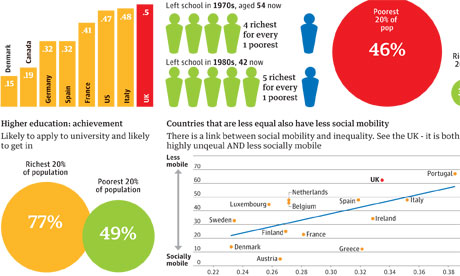
The problem that comprehensive education has is quite simple. Its catering for the needs of a few in the middle achievement level of society and nobody else. This is why we are failing to produce enough technically skilled workmen in Britain and thus to an extent use more foreign labour. Similarly this is why Oxbridge has to artificially select pupils from state schools, who would not meet their standards on merit, under pressure from the Government. Social mobility is on the decline in the UK.


However this was not a problem after the war with Grammar Schools. Selection of the brightest students, but also of those who are more technically able, led to the greatest moments of social mobility the country saw in the 1970s and 1980s. The Wilson, Heath, Callaghan and Thatcher government saw the break through of people who were not at Eton or a member of the aristocracy.

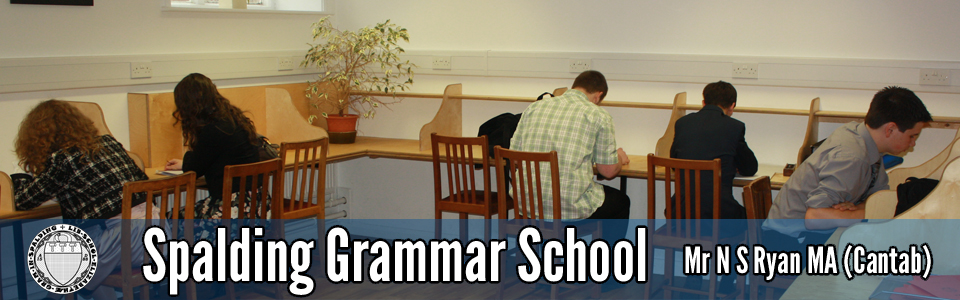
My School was Spalding Grammar School. But who is the chap in the blue suit?

Grammar Schools however have a problem though. During the 1960s the Labour government  decided that they didn't produce social mobility. This was partially out of an ideological belief of equality but also because the Secretary of State for Education had a bias of being lower members of upper middle class society. Anthony Crosland as Education Secretary said at the time "If it's the last thing I do, I'm going to destroy every f*#@ing grammar school in England. And Wales and Northern Ireland." Since then there has been a stigma against Grammar Schools, by those who have believed the Labour lie, were actually elitist places for those who just missed out on Harrow.

Areas in red kept Grammar Schools after the 1960s, a good idea.

So what is to be done? Well I think there is promise in the governments education programme. With academies and free schools there is an ability to select and differentiate between the teaching of pupils according to their ability. In this country we select on the basis of religion as well as musical, artistic and sporting ability. Scholarly ability is the next step but it should not be called Grammar Schools because the brand is a bit to damaged for implementation of them.

Wednesday, 12 June 2013

#TheBigPicture

I'm back from an absence of two days and once again I’m on the air debating this week’s issues on the political radio show, the Big Picture, on URN. I am putting this up a few minutes before we start, at 6pm. Please listen in.

Up for debate tonight is the Labour Party in opposition (speaking particularly about the 'policies' of last week), GCHQ and William Hague and the Lobbying scandal.

You can send it texts to our show on the URN homepage and are able to listen to us on there too. Here is the link http://urn1350.net/ 

Sunday, 9 June 2013

Weekly Poll Lowdown

Well this is all very interesting because there is such a wide range of opinion on this issue. A plurality of people would like MPs salaries to be raised although there is no consensus to what level. The option most voted for however was for things to stay the same. Interestingly a significant minority of people thought MPs deserve a pay cut.

Should MPs expenses be got rid of and the salaries of MPs be raised?

Yes, to £150 K per year.
8%
Yes, to £100 K per year. 
15%
Yes, to £80 K per year. 
23%
No things should stay the same. 
31%
MPs should get a pay cut.
23%

Total votes: 25

So what do I think? Well I do think that MPs salaries should be raised to around £100,000 if expenses are cut.

We have a potential problem which may affect our democracy. We have right up to 2010 been building a better representation of  MPs from all socio economic backgrounds. It is obviously easy for millionaires to get into Parliament than those who are more like the public because millionaires have more money. But since the expenses scandal the pockets are MPs are on the squeeze. Rightly so they can no longer claim for duck houses and gravel drives but the new expenses system can also be too rigid in not allowing basic office equipment sometimes. Even going through the process of IPSA puts off many MPs for claiming for the basic things.

Duck Houses are rightly out.

For the poorest of MPs, this can be a big problem. Who wants to do a job when you're going backwards on the real pay you get? Where is the incentive for the best people to run the country rather than those who are a modern day version of a Georgian fop? We could liberalise benefits again as some MPs want, but some will just want to start fiddling which is not good. So raising their salary is a good idea as we don't necessarily change the amount spent on MPs by the public by doing this, but we give a higher amount to MPs. That way we may have less scandals although the genuinely greedy will stop at nothing.

IPSA is not amazing at its job and has put off many people from continuing or becoming MPs, not great for democracy. 

But should this happen? Probably not, it would a PR disaster. No government could be able enough to avoid the media storm of raising MPs salaries in a time of austerity. The public would not easily understand it and Labour would spin this so hard that it would seriously effect the government in polling. Perhaps this should be looked at when times are better, common sense however stipulates that things should stay the same.

Please vote in the next poll.